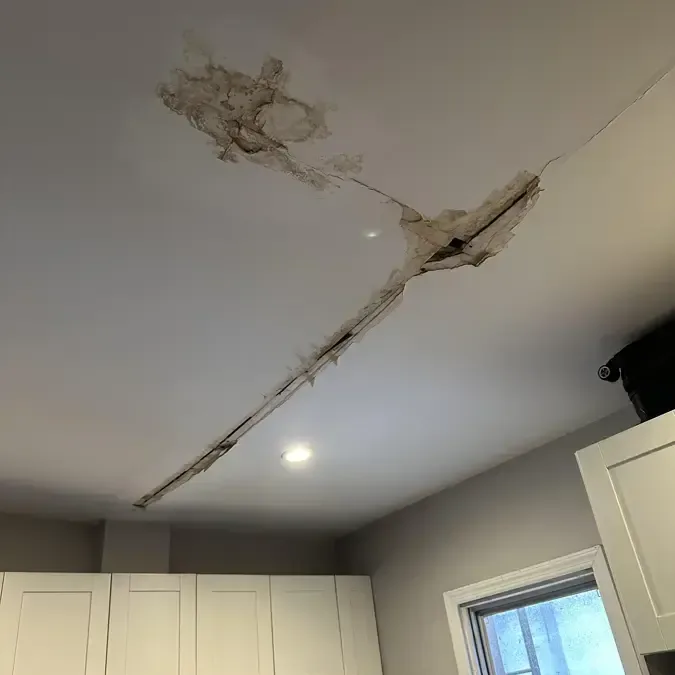
A brown stain or a sagging patch of ceiling in an East Orange apartment often points to the unit above. Tracing the source first, and drying the ceiling cavity second, keeps a small leak from turning into a large one.
Key takeaways
- Only 27.4% of East Orange housing units are owner occupied (2019 to 2023), so many leaks cross from one household to another.
- A stain is usually the end of the path, not the start, because water can travel along joists before it shows.
- Tell the building manager in writing, and photograph the stain, the ceiling and any wet belongings.
- A wet ceiling is opened in a controlled way so trapped water drains and the cavity can be dried.
- The unit above may have a burst pipe, a failed appliance hose or a slow drain leak, so the source is confirmed before the ceiling is closed.
Why ceiling leaks so often start upstairs
The 2020 Census counted 30,357 housing units in East Orange and 69,612 residents. The owner occupied rate was 27.4% for 2019 to 2023, which means many households share a building with neighbors above and below.
Newer apartment buildings have also gone up along South Harrison Street, while NCES figures show 67.2% of structures in the school district area were built before 1970. Buildings of every age have supply and drain pipes running through floors and ceilings.
Reading the stain
The shape and color of a stain say a lot about the leak behind it.
- A yellow or brown ring with a darker edge usually means repeated wetting.
- A bulge or sag means water is trapped in the ceiling material.
- Bubbling or peeling paint points to moisture behind the surface.
- Drips at a light fixture mean water has reached wiring, so that circuit should stay off.
- A stain that grows after the upstairs bath is used points to a tub, shower or drain leak.
Finding the source
The stain only shows where the water came out. The source can sit several feet away along a joist, because water runs along framing before it drips.
Checking the unit above
Likely sources include a tub or shower, a toilet supply, a kitchen sink or dishwasher, a washer or a burst pipe. The household above should stop using the suspect fixture until the source is known.
Using instruments
A moisture meter finds wet material that cannot be seen. A thermal camera shows cooler wet patches.
Readings are taken in the room below, the room above and the walls between.
Those readings also set the boundaries of the drying work, so no wet area is left behind.
When the stain is not from the unit above
Some stains come from somewhere other than the unit above, and finding the real source saves time and money.
- Condensation on cold pipes or ducts can drip onto a ceiling and leave a stain.
- A roof leak in a top floor unit shows up the same way as a plumbing leak.
- A leaking window can send water down the wall and across the ceiling edge.
- Air conditioner condensate can overflow a pan or back up a drain.
- A stain that grows only after rain points to the roof or an exterior wall.
Opening and drying the ceiling
A sagging ceiling holds water and weight. The restoration team opens it in a controlled way, usually with small holes first, so the water drains out instead of dropping all at once.
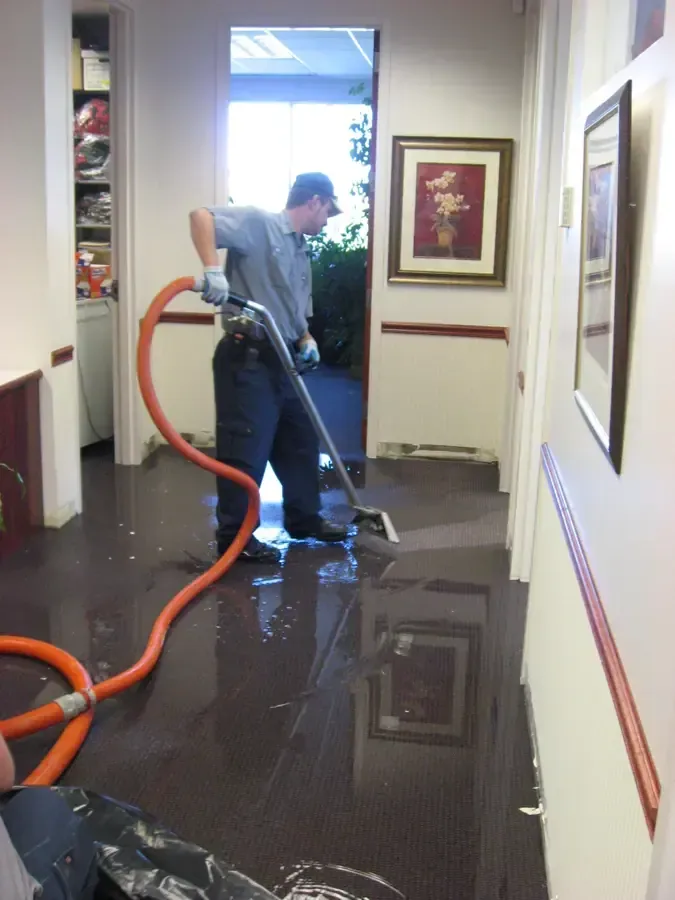
After that, damaged ceiling material and wet insulation come out, and drying equipment is set up to move air through the joist bays. A full ceiling leak water damage job ends with readings, not with a patch of fresh paint.
Wet framing and plaster in adjoining walls are dried too. Structural drying covers the equipment and readings used for that stage.
- Drain trapped water through small openings.
- Cut out saturated drywall or plaster and remove wet insulation.
- Set air movers and dehumidifiers to dry the cavity and the walls.
- Take readings each day until the materials match a dry reference.
- Close the ceiling only after the source is fixed and the cavity is dry.
A day by day look at the dry down
Day one is about stopping the water and removing what holds it. The source is confirmed, trapped water is drained and wet ceiling material and insulation come out.
Days two and three are about the equipment. Air movers push air through the joist bays and dehumidifiers pull the moisture out, while readings are taken each day to see how fast the materials are drying.
The final days are about proof. When readings match a dry reference, the equipment is removed and repairs can begin.
If a reading stays high, the crew looks for a second source rather than assuming the drying is slow.
Who to tell, what to document and how to protect belongings
The people involved depend on who rents and who owns. The records matter in every case.
- Tenants tell the building manager or landlord in writing and keep a copy.
- Owners contact their insurer and the building management.
- Photograph the stain, the ceiling, the floor and any damaged belongings before moving them.
- Write down when the leak was found and what was shut off.
- Keep estimates, invoices and messages in one folder.
Protecting belongings and the household while it dries
A wet ceiling is a hazard as well as a mess. Plaster and drywall are heavy when wet, and a drip can reach wiring.
- Move furniture and electronics out from under the stain.
- Cover items that cannot be moved with plastic sheeting.
- Keep children and pets out of the room until the ceiling is opened or secured.
- Leave light fixtures and ceiling fans off if water is near them.
- Open interior doors and keep the room's heat on so air can move.
When the source is a burst pipe
Sometimes the leak above is not slow. A split supply pipe can release a steady flow, and the ceiling below fills quickly.
The fastest step is to shut off the water to the unit above.
A burst pipe means extraction first, then cavity drying across the units it reached. Burst pipe water damage work follows that order, and the wet ceiling below is one part of a larger drying plan.
Questions
How can a tenant tell the leak comes from the unit above?
A stain that grows when the upstairs bath, sink or washer is used points that way, as does damp material in a wall that shares a bathroom with the unit above. The restoration team confirms it with moisture readings.
Should a bulging ceiling be popped?
A bulge holds water and weight, and it can drop without warning. It is better left to the restoration team, which opens it in a controlled way. If it is dripping, place a container under it and keep people out of the room.
Can the ceiling just be repainted after it dries?
Only if readings show the material is dry and the source is fixed. Painting over damp plaster or drywall traps moisture and brings the stain back.
What if the unit above will not stop using the water?
The building manager is told in writing, with photos. The manager can enter the unit above and shut off the supply. Until then, the household below can protect belongings and document the damage.
How long does a ceiling take to dry?
A small stain caught early may dry in a few days, while a ceiling cavity that held water for longer takes more. Moisture readings decide when the equipment comes out.