Structural Drying and Dehumidification in Kearny, NJ
Structural drying is the part that keeps water damage from coming back. The drying team sets air movers and LGR dehumidifiers to the class of loss and logs readings until materials match a dry reference.
(888) 471-9821Floors still damp days later? Call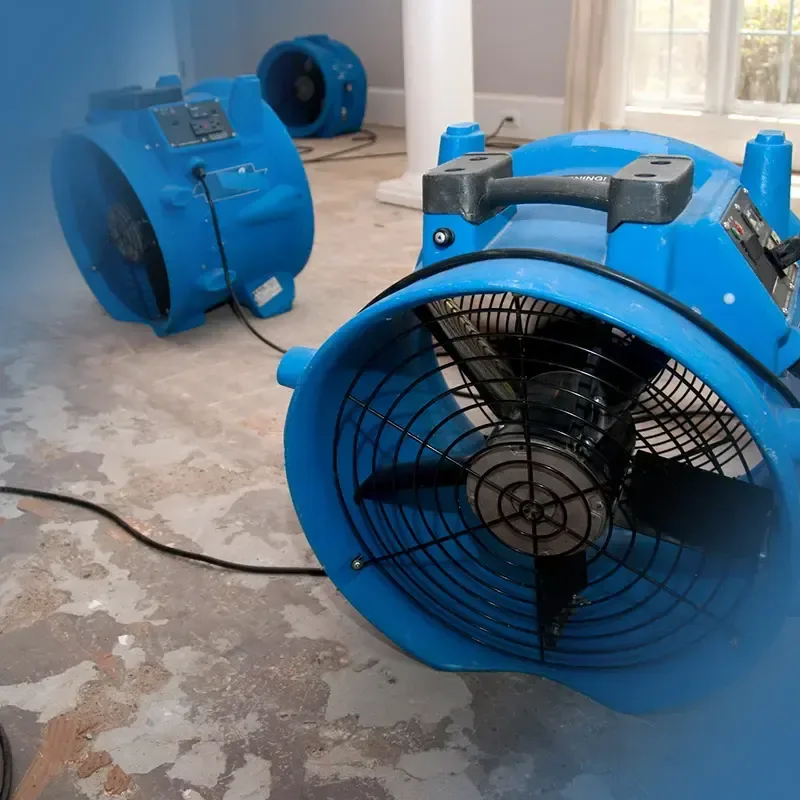 IICRC S500 drying
What every structural drying and dehumidification job includes
Dispatch at any hour
Active water is treated as urgent around the clock, weekends and holidays included.
Drying to IICRC S500
Air movers and LGR dehumidifiers sized to the class of loss, not to a guess.
A claim-ready file
Moisture maps, daily psychrometric logs and timestamped photos before any demolition.
Old-house know-how
Plaster, balloon framing, stone foundations and cast iron drains are routine work here.
What to do before the crew arrives
A few safe moves limit how far the water travels while the truck is on the way.
Call (888) 471-9821- Leave the equipment running. Turning it off resets the drying and adds days.
- Keep doors and windows closed. The dehumidifiers work on the air inside the containment.
- Do not move the air movers. They are aimed at specific wet surfaces.
- Note any new stains. Tell the drying team at the next reading.
What does structural drying and dehumidification cost in Kearny, NJ?
Structural drying here typically runs $1,200 to $16,000, depending on the class of loss, the number of rooms, whether plaster, hardwood or masonry is involved and how many days the equipment runs.
One room, Class 1 or 2
- Moisture map
- Air movers and LGR
- Daily readings
Several rooms or a basement
- Equipment plan by class
- Cavity drying
- Psychrometric logs
Class 4 materials
- Hardwood panel drying
- Plaster and masonry
- Extended drying
Ranges are typical, not a quote: water category, square footage, material class and how fast drying started move the number most. Try the water damage cost calculator for a closer range.
How structural drying and dehumidification is handled, step by step
Map
Moisture map and dry reference taken.
Plan
Equipment sized to the class of loss.
Dry
Air movers, LGR dehumidifiers, cavity drying.
Verify
Daily logs until readings match the reference.
Surface-dry is not dry. Plaster, framing, subfloor and basement block can hold water long after a floor feels dry, and that hidden moisture is what warps floors and feeds growth later. Structural drying finds it, removes it and proves it is gone with readings, which matters in Kearny's older plaster and masonry houses.
How drying is planned
The drying plan follows the IICRC S500 standard and starts with a moisture map.
- Class 1 to 4 sets how much evaporation is needed
- Category 1 to 3 sets what can stay and what comes out
- A dry reference is taken from unaffected material in the same building
- Equipment is sized to the room volume and the class of loss
Plaster, hardwood and masonry
Dense materials such as plaster on lath, hardwood floors and block or stone walls are Class 4 and dry slowly. The drying team holds the air dry with LGR dehumidifiers, uses panel systems on hardwood and injection drying into wall cavities, and adjusts equipment from the daily readings.
Water still moving? Close the shutoff if it is safe, keep clear of wet outlets, then call.
Call (888) 471-9821Proving the building is dry
Daily psychrometric logs record temperature and humidity, and moisture readings on each wet material are compared with the dry reference. Equipment leaves when the readings match. Drying usually follows water extraction and finishes a basement flooding cleanup.
Official guidance
For safety steps beyond the dry-out, see EPA indoor air quality and Ready.gov flood safety.
Structural drying and dehumidification across Kearny and West Hudson
The restoration team covers ZIP 07032 and 07099, from the row houses of the Uplands and Arlington down to East Midland, the Meadows and the warehouses of South Kearny and Kearny Point.
Nearby coverage reaches North Arlington, Harrison, East Newark, Lyndhurst, Belleville, Newark, Secaucus, Jersey City.
Related water damage services
Structural Drying and Dehumidification questions, answered
Still dealing with structural drying and dehumidification?
Walls or floors still wet after the water is gone? Call for readings.
(888) 471-9821 Book moisture readings for the wallsWhat is the IICRC S500 drying goal?
Wet materials are dried to within about 2 to 4 points of a dry reference taken from the same material in an unaffected part of the building.
Why do the dehumidifiers run so long?
Dense materials give up water slowly. The equipment stays until readings say dry, not until the surface feels dry.
Can plaster walls be dried in place?
Often, when the water was clean and drying starts early. Plaster takes longer than drywall and is checked with readings.
What does a dehumidifier cost to run?
The units draw household power. The drying plan balances the number of units against the drying time.
Is structural drying covered by insurance?
It is part of the mitigation on a covered loss. The daily logs support the claim. Check your own policy.
How long does structural drying take?
Three to five days for most losses, and longer for Class 4 materials such as plaster, hardwood and masonry.
Still damp after the cleanup?
Hidden moisture in plaster, framing and block keeps doing damage. The drying team maps it, dries it and proves it with daily readings.
(888) 471-9821Set the dehumidifiers running