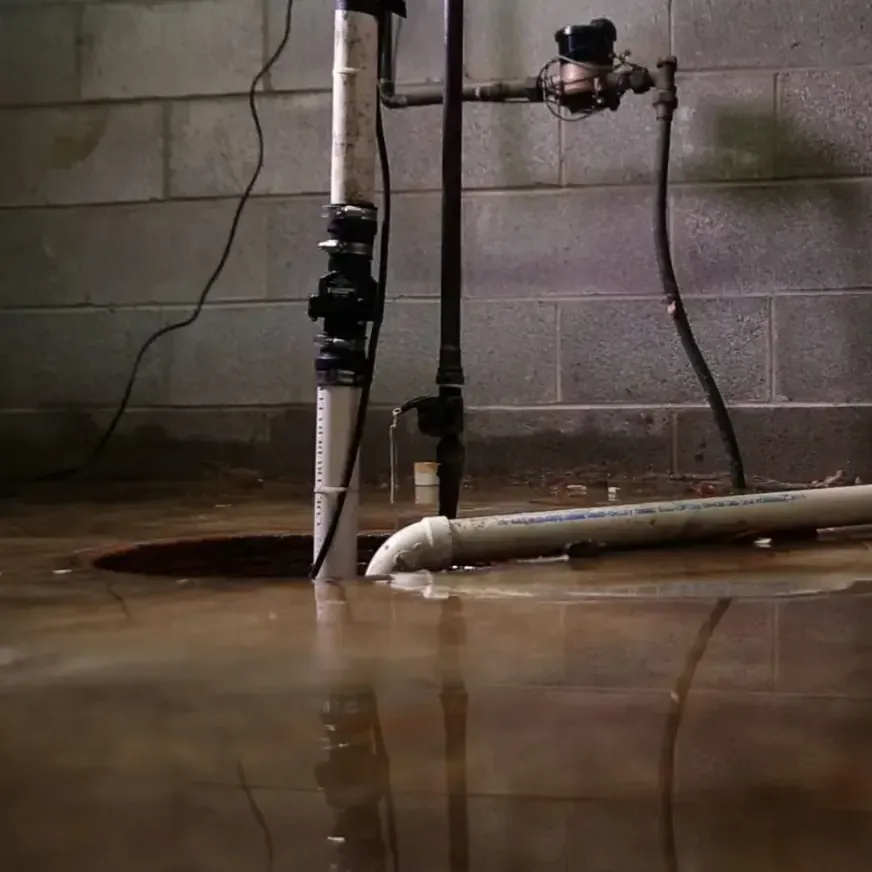
When storm drains fill, the water has to go somewhere, and in Harrison that has meant basements and first floors. Hurricane Sandy on October 29, 2012 showed how quickly that can happen, and the same steps apply to any storm drain backup.
Key takeaways
- Storm drain water that enters a basement carries street runoff and may carry sewage, so it is handled as Category 3 water.
- During Hurricane Sandy, drains backed up along Warren, Sussex and Bergen Streets and off First Street, filling basements and first floors quickly.
- Touch the electrical panel only if it can be reached from dry ground. Otherwise leave it to an electrician.
- Basement ceilings collapsed and paint peeled off basement walls in flooded homes after Sandy, so wet drywall and insulation are removed, not just dried.
- Dry and document the room before rebuilding, since the First Street area flooded in Hurricane Irene in August 2011 and again in Sandy.
How a backed up storm drain floods a basement
The town is small and tightly built, with 19,450 residents living close together, so a flooded basement is rarely only one household's problem. A storm drain carries rain from streets and driveways away.
When the river is high or the pipes are full, the flow can reverse, and water rises through floor drains, window wells and low doorways.
The town sits on the Passaic River, and most of its redevelopment area lies within a 100 year flood plain. Low basements near the river have taken water before.
What Sandy showed
The Passaic River came over its banks in Harrison around 6 p.m. on October 29, 2012, just before the power went out.
Storm drains backed up along Warren Street, Sussex Street and Bergen Street and off First Street, quickly filling basements and first floors. Floodwater also reached Hamilton Street, Reynolds Avenue and Cleveland Avenue, and on Warren Street water rushed into basement windows.
Police and fire crews rescued more than 60 residents early in the storm, using a boat loaned by the Hudson County Office of Emergency Management and a front end loader. The town opened its senior center and high school as emergency shelters for more than 200 residents at the peak.
Why the water is not clean
Street runoff carries oil, litter, animal waste and chemicals. The Passaic Valley Sewerage Commission repairs combined sewer overflow regulator chambers that include Harrison, so drain water may also carry sewage.
For that reason the cleanup treats it as Category 3 water, with protective gear and removal of porous materials.
The first steps in a flooded basement
The aim is to stay safe, stop the damage from growing and preserve the evidence of what happened.
- Stay out of standing water until the power question is settled. Water and live electricity together are the greatest danger.
- If the panel, outlets or cords are in the water, do not touch them. An electrician can make the area safe.
- Move small valuables, papers and photographs to a higher floor if the stairs are dry.
- Photograph the water level, the walls and the stored items before moving anything else.
- Keep children and pets out of the basement and away from the water.
- Wait to pump the basement dry all at once if the ground outside is still saturated. The restoration team decides the pace.
Extraction comes before drying
Pumps and extractors remove standing water first. A restoration crew often lowers the level in stages when the ground outside is still wet, so walls and floors are not stressed.
Once the standing water is gone, the crew checks what the water touched: drywall, insulation, framing, flooring and stored items. Professional water extraction is the stage that makes every later step possible.
What the crew checks after the water is out
Water in a basement reaches more than the floor. The crew looks at everything that sat in its path and decides what stays and what goes.
If the basement ceiling is finished, readings are taken above it as well, since the collapsed ceilings after Sandy showed how much water that material can hold.
- The furnace, boiler and water heater, which a technician checks before they are restarted.
- The electrical panel and outlets low on the walls.
- Stored boxes, books and papers, which are lifted out and sorted.
- Washers, dryers and freezers that sat on the floor.
- Drywall, insulation and trim behind the visible wall surface.
- Stair stringers, posts and the bottom of the framing.
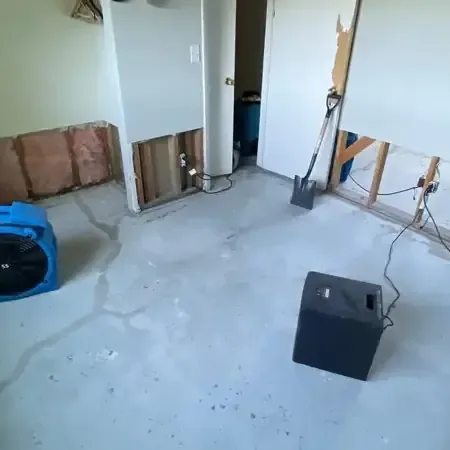
What wet basement ceilings and walls tell the crew
After Sandy, basement ceilings collapsed and paint peeled off basement walls in flooded Harrison homes. Both are signs that drywall took on far more water than it can hold.
Drywall that has wicked water upward, or a ceiling that sags, is cut out rather than dried in place. Insulation behind it is removed too, because wet insulation holds water against the framing.
- A soft, crumbling or sagging surface has failed and comes out.
- Paint that bubbles or peels means moisture is behind the surface.
- A tide mark on the wall shows how high the water reached.
- A musty smell means material stayed wet, and within 24 to 48 hours mold can start to grow.
When the same streets flood twice
Some homes in the First Street area flooded in Hurricane Irene in August 2011. Owners then replaced boilers and heaters and remodeled their basements, and the area flooded again in Sandy.
The lesson for any owner is to dry, document and think before rebuilding what sits lowest. A full basement flooding cleanup ends with readings that show the room is dry, not with a coat of paint.
- Confirm drywall, framing and floors are dry to readings before closing walls.
- Look at where boilers, water heaters and electrical panels sit compared with the floor.
- Keep stored items on shelves above the floor rather than in boxes on it.
- Photograph the finished room so a later claim has a before picture.
Insurance and the planned river protection
Homeowner policies and flood insurance treat water differently, so the source should be written down when the loss is reported: storm drain backup, river overflow or both.
The town worked with the U.S. Army Corps of Engineers and NJDEP so the Harrison portion of the Passaic River Tidal Flood Control Project, a system of floodwalls and levees, is planned to protect the redevelopment area. A planned project does not change what to do once water is already in a basement.
For river water that comes in at the surface, storm and river flood cleanup covers the added steps.
Questions
Which Harrison streets took water in Hurricane Sandy?
Storm drains backed up along Warren Street, Sussex Street and Bergen Street and off First Street. Floodwater also reached Hamilton Street, Reynolds Avenue and Cleveland Avenue.
Is storm drain water in a basement contaminated?
Yes, it is handled as Category 3. Street runoff carries chemicals and animal waste, and drains tied to combined sewers can carry sewage. Porous materials that soaked it up usually cannot be saved.
Should wet drywall in a basement be removed?
Often yes. Drywall that sags, crumbles or peeled after contact with flood water has taken on too much moisture, and the insulation behind it holds water against the framing. The crew cuts above the water mark and dries the cavity.
How long does a flooded basement take to dry?
Several days is common once the standing water is out and wet materials are removed. The depth of the water, the materials involved and the weather change the timeline, and moisture readings decide when the room is dry.
Does a planned floodwall stop a storm drain from backing up?
The Passaic River Tidal Flood Control Project is described as planned and is aimed at the redevelopment area. It is not finished, and it is not a repair for a backed up drain, so the cleanup steps stay the same.