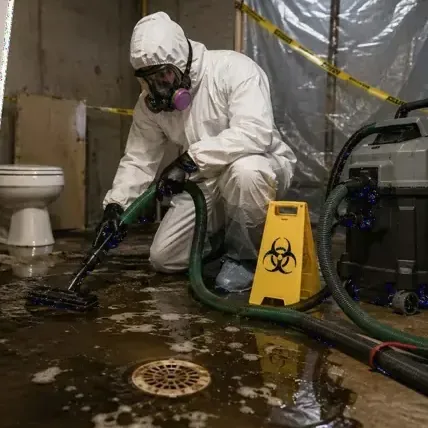
When heavy rain pushes dirty water up through a basement floor drain, the problem is sewage, not a spilled bucket. In Kearny, where storm water and household waste share one sewer system, the steps taken first decide how much of the house is affected.
Key takeaways
- Water that comes up a floor drain after heavy rain is Category 3, so it is treated as contaminated until the cleanup proves otherwise.
- The town has a combined sewer system with five overflow outfalls and infrastructure more than a century old, which is why storm volume can push water back toward homes.
- Stop using sinks, tubs, toilets and the washer while the drain is rising, because every gallon sent down the house drain adds to the problem.
- Photograph the water, the drain and the affected belongings before anything is moved.
- Porous materials such as carpet pad, insulation and low drywall usually cannot be saved, while hard surfaces can be cleaned and treated.
Why a floor drain can fill during a storm
A combined sewer carries storm water from streets and roofs in the same pipes as household waste. When a heavy rain sends more water into those pipes than they can move, the water looks for the nearest way out.
Some of it leaves through overflow outfalls. Some of it backs up toward the lowest opening it can reach, and in many houses that opening is a basement floor drain.
A combined system under pressure
The sewer system here is a combined one with five overflow outfalls. A 2015 estimate counted about 40 overflows a year at those outfalls.
The infrastructure is more than a century old, and a long term control plan under the Clean Water Act aims to cut the overflows. None of that is a promise about one street or one house.
It is the background for why a backup is a known risk.
Tide water can come the other way
During Hurricane Sandy on October 29, 2012, the town's five sewer pump stations were inundated and stopped without power. They sat on East Midland Avenue, Quincy Place, John Hay Avenue, Sellers Street and Harrison Avenue.
Tidal surge came up through the sewer pipes and flooded most houses in the East Midland section. That storm is the clearest local example of sewer water entering homes from below rather than from the sky.
The first steps when water rises in the drain
Speed matters, and so does staying safe. Sewage carries bacteria that can cause illness through skin contact and splashes, so the goal is to limit exposure while limiting the spread.
These steps apply to the household before the extraction crew starts work.
- Stop running water anywhere in the house until the drain settles.
- Keep children, pets and anyone with a health condition out of the area.
- Leave the electrical panel and outlets alone if they are near the water. An electrician or the restoration team can make the area safe.
- Wear waterproof boots and gloves if you must enter, and keep hands away from the face.
- Take photos and short video of the water level, the drain and stored belongings.
- Do not use a household vacuum on the water, because it can spray a contaminated mist through the room.
Is it the sewer system or the house drain?
Not every backup comes from the street. A blockage in a home's own drain pipe can push water up the lowest drain too, and the two causes call for different next steps.
The cleanup is the same either way, because sewage is sewage. What changes is who needs to know and what can be done to prevent a repeat.
Signs the whole system is overloaded
Several drains back up at once, the problem starts during or right after heavy rain, and neighbors report the same thing. That pattern points to storm volume in the combined system.
Signs the house drain is blocked
Water backs up only when one fixture is used, the problem happens in dry weather, or a drain runs slowly for days beforehand. That pattern points to a blockage in the home's own pipe.
A plumber can camera the pipe and clear it. The restoration team cleans up whatever the blockage sent onto the floor.
Why this water is treated as Category 3
Restoration work follows the IICRC S500 standard, which sorts water into three categories. Category 1 comes from a clean supply source, Category 2 carries some contamination, and Category 3 is grossly contaminated, such as sewage and river or flood water.
Water that rises through a drain connected to a sewer is Category 3 from the start. Time does not clean it, and a floor that looks dry after a day can still hold contaminated material in the pad and along the edges of the concrete.
That is why the crew removes porous material instead of drying it in place. Dry sewage residue is still sewage residue.
What the cleanup crew does
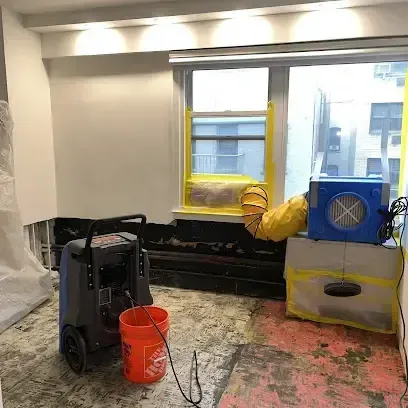
The extraction crew works in a set order so contamination is not carried into clean rooms. When the water came up the drain, a sewage backup cleanup follows this order, and a storm and river flood cleanup adds more extraction when water also entered from outside.
- Containment: the work area is sealed off and foot traffic is controlled.
- Extraction: pumps and wet vacuums pull the water off the floor.
- Removal: carpet, pad, baseboards, insulation and drywall that soaked up the water are cut out and bagged.
- Cleaning: hard surfaces are washed and treated with an antimicrobial product.
- Drying: air movers and dehumidifiers run until moisture readings match a dry reference.
What can and cannot be saved
Sorting happens after the water is out, and the rule is simple. Porous materials soak up contaminated water and usually go, while hard, sealed surfaces can be cleaned.
A finished lower level raises the stakes, since more material sits in the water's path. When the water came through walls or windows instead of the drain, basement flooding cleanup follows the same order.
- Usually discarded: carpet and pad, insulation, particle board, mattresses and upholstered furniture.
- Often cut out: drywall and trim touched by the water, removed above the water mark.
- Usually cleaned: concrete, tile, metal, glass and hard plastic.
- Case by case: solid wood furniture, books, papers and keepsakes, which are photographed first and handled separately.
Lowering the odds of a repeat
A repeat is possible any time heavy rain overloads a combined system, so a few habits help. None of them stops a backup, but each one reduces what a backup can reach.
- Keep stored items off the floor in low areas, on shelves or in plastic bins.
- Know where the floor drain is and keep its cover clear.
- Ask a plumber whether a device that stops reverse flow suits the drain.
- Photograph the room when it is empty and dry, so a later claim has a before picture.
- Keep a short list of who to contact for the building, the insurer and a restoration team.
Questions
Is water from a floor drain after rain safe to touch?
No. It is treated as Category 3 water, which can carry bacteria and other contaminants. Skin contact, splashes and breathing mist from a vacuum are the main concerns, so the area is best left to trained crews wearing protective equipment.
Should fans and a dehumidifier go on right away?
Not until the water is extracted and the contaminated materials are out. Moving air across sewage water can spread contamination, and drying wet porous material in place does not make it safe.
Does homeowners insurance cover a drain backup?
It turns on the terms of the policy. Backup of a drain or sewer is often covered only through an added endorsement, so the insurer is best asked before anything is thrown out. Photos taken before removal support the claim.
How long does the cleanup take?
Extraction and removal are usually finished in one visit for a contained backup. Drying often runs several days, and moisture readings, not the calendar, decide when the work ends.
Can the water come back after the cleanup?
It can if another heavy rain overloads the system. The crew removes contaminated material and treats the surfaces, but it cannot change how the sewer carries storm water. Raising stored items and asking a plumber about reverse flow protection reduce the damage if it happens again.