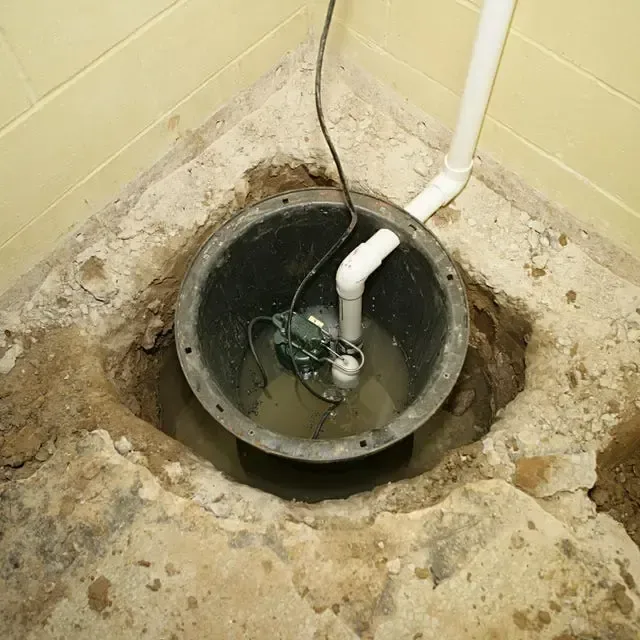
On October 29, 2012, the town's five sewer pump stations stopped when the power failed. A sump pump in a house works the same way, and when the pit overflows, the water goes where the pump used to send it.
Key takeaways
- A pump that runs on household power stops when the power does, which is the failure to plan for during storms.
- In Hurricane Sandy, the town's five sewer pump stations were inundated and stopped without power.
- Pumps also fail from stuck floats, clogged intakes, worn motors and a discharge that is blocked or frozen.
- Where a house has a sump pump, a battery backup, a regular test and a clear discharge cut the risk.
- After an overflow, water is extracted, wet materials are sorted by water type, and the room is dried to readings.
A pump is only as reliable as its power
During Hurricane Sandy, the five sewer pump stations on East Midland Avenue, Quincy Place, John Hay Avenue, Sellers Street and Harrison Avenue were inundated and stopped without power.
A household sump pump is a small version of the same machine. It senses rising water in a pit and pumps it away, but an electric motor does nothing if the outlet is dead.
Storms often bring outages at the same moment the ground is wettest. That combination is what causes overflows.
Ways a sump pump fails
Not every failure announces itself. A pump that has not run in a dry spell can seem fine until the first heavy rain.
- Power loss: an outage, a tripped breaker or an unplugged cord.
- A stuck float: the switch that starts the pump jams against the side of the pit.
- A clogged intake: silt or debris blocks the screen at the bottom.
- A worn motor: an old pump runs hot and quits.
- A blocked or frozen discharge: the water has nowhere to go outside.
- Too much water: the pump runs but cannot keep up with the inflow.
Warning signs before a storm
A pump that is about to fail often gives hints. Catching them in dry weather is far cheaper than catching them during a storm.
- The pump runs constantly or cycles on and off too often.
- The motor is loud, hot or rattles while it runs.
- The pump runs but little water leaves the discharge outlet.
- Rust or debris sits in the pit.
- The pump is old, or no one knows when it was installed.
Why low ground raises the stakes
The town divides into three parts: the Uplands, the Meadows and South Kearny, where the Passaic and Hackensack rivers meet. The Meadows is low wetland ground, and the town's elevation is listed at 7 ft.
In Sandy, water stood four to five feet deep in the South Kearny police substation on South Hackensack Avenue, a reminder of how much water the low ground can hold. With rivers on both edges and low ground in the middle, water has few places to go when a pump quits.
Whether a given house has a sump pump depends on the house. Where one is installed, it deserves the same attention as any other safeguard.
What to do when the pit overflows
Water from a pit is groundwater that can carry soil and bacteria. If the sewer is involved, it is treated as Category 3.
Sump water rises quickly once the pit is full, and it can reach outlets, a furnace and stored boxes before anyone notices. The longer it sits, the more material wicks it upward, so the order of the steps below matters as much as the speed.
- Stay out of the water until the power is dealt with. Do not touch the panel from wet ground.
- Stop any other source of water, such as a washer or a running tap.
- Move belongings off the floor and onto shelves or stairs.
- Photograph the pit, the water level and the damage.
- Do not run a household vacuum on the water.
- Contact the restoration team to extract the water and check the walls.
Cleanup after an overflow
The sequence is the same as for any basement water loss, with a few extra checks around the pump. For losses like this, sump pump failure cleanup covers the extraction and the drying that follows.
Extraction and sorting
Standing water is pumped out first. The crew then tests what the water touched and sorts it by type.
Groundwater from a pit is usually treated as Category 2 or 3, depending on what it mixed with on the way in.
Drying a finished lower level
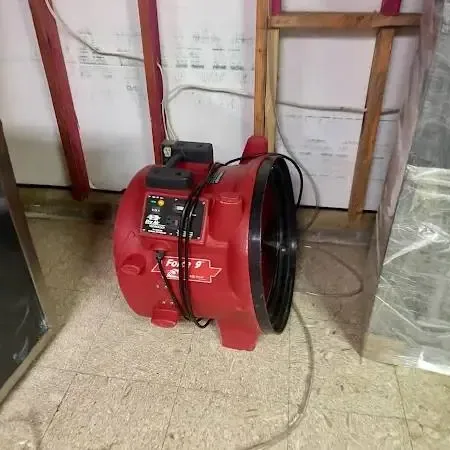
Carpet pad, insulation and low drywall are removed when they are saturated. Framing and concrete are dried with air movers and dehumidifiers.
A full basement flooding cleanup ends with readings that match a dry reference, not just with a dry looking floor.
Backup power and routine checks
The cheapest protection is a short routine. When a storm is forecast, a few minutes at the pit is worth the time.
For flood water that enters from outside rather than from the pit, storm and river flood cleanup covers the extra steps.
- Add a battery backup so the pump still runs when the power is out.
- Pour water into the pit and watch the float lift and the pump start.
- Clear silt and debris from the pit and the intake screen.
- Check the discharge outlet outside for blockage, ice or a crushed hose.
- Replace an old pump before it fails, rather than after.
- Keep stored items off the basement floor.
Plan for the longest outage
A battery backup is sized in hours of run time, and a long storm outage can outlast it. Planning for the longest likely outage, not the average one, is what keeps the pit from overflowing.
Some owners add a generator or a second pump, while others keep a manual plan to move belongings off the floor. Whichever plan is chosen, it works best when it is written down and tested before the forecast turns bad.
Questions
What happens to a sump pump during a power outage?
An electric pump stops when the power does, and the pit fills. Unless a battery backup or a generator keeps it running, the water rises and overflows onto the floor.
Does a battery backup solve the problem?
It helps, but it has limits. A backup has a limited run time, and the battery needs testing and replacing. It is one layer, alongside a working main pump and a clear discharge.
Is sump pit water contaminated?
It can be. Groundwater carries soil and bacteria, and if sewer water has mixed in, it is Category 3. The crew tests and sorts the water before choosing how to handle the materials.
Does insurance cover a sump pump overflow?
Standard homeowner policies often exclude it unless an endorsement adds it. The insurer is the right one to ask, and photos of the pit, the failed pump and the damage support the claim.
How long does a basement take to dry after an overflow?
Several days is common once the standing water is out and wet materials are removed. The amount of water and the finishes involved change that, and readings decide when the work ends.
Can a sump pump overflow bring sewage into the house?
Only if sewer water mixed with the groundwater, for example during a storm that also loads the sewer. The crew checks the source and the water type before choosing how to handle carpet, pad and other porous materials.