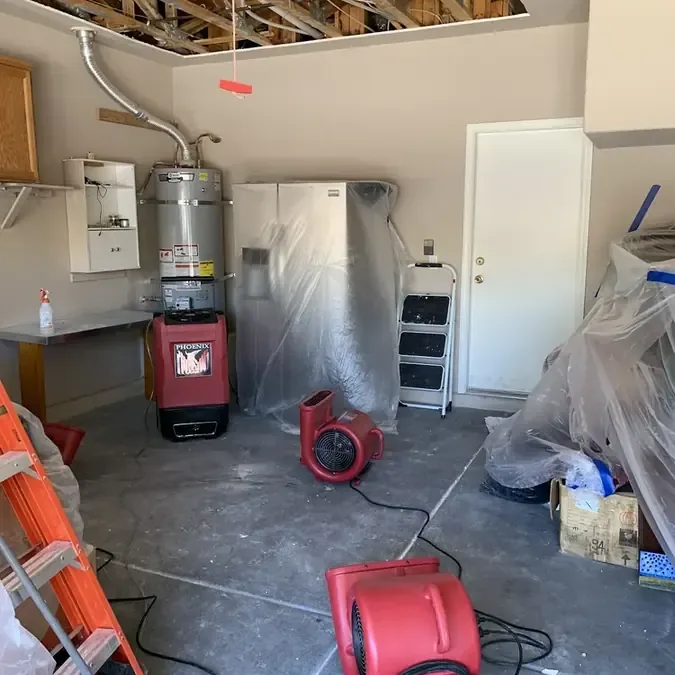
In the East Ward, where large apartment buildings and rowhouses are packed close together, one leaking water heater or washer can soak a neighbor's ceiling before anyone notices. Acting on both sides of the floor limits the damage.
Key takeaways
- The East Ward is densely packed with large apartment buildings and rowhouses, so water from one unit often reaches the unit below or next door.
- Shut off the water supply to the heater or washer first, then the power or gas to the heater as its controls direct.
- Tell the building manager or owner in writing, and photograph the damage in every affected unit before anything is moved.
- The leaking unit has the source and the unit below often has a wet ceiling, so both households have drying work.
- Drying plans cover floors, walls and ceilings across units, and readings in the adjoining units decide when the work is done.
Why leaks travel in Newark's apartment buildings and rowhouses
Newark is the most populous city in New Jersey, with 311,549 residents counted in the 2020 Census. The East Ward holds much of downtown and the Ironbound, and it is densely packed, mostly with large apartment buildings and rowhouses.
In buildings stacked this way, floors and ceilings are shared. Water follows pipes, joists and gaps in the floor into the space below.
In the leaking unit
Water spreads across the floor, under cabinets and baseboards, and into the wall cavity behind them.
Hardwood, laminate and vinyl floors can lift as the subfloor takes on moisture, and stored boxes in a closet soak up water from the bottom.
In the unit below
The first sign is often a stain or sag in the ceiling, a drip at a light fixture or damp paint near the wall.
By then the ceiling cavity is usually full of water, and the ceiling material is heavier than it looks.
How a water heater fails and how to shut it down
A tank water heater can fail slowly, with a weep at a fitting, or suddenly, with a split in the tank. A heater in a closet or utility room sends water into door frames and the floor beyond.
Warning signs are worth acting on before a full failure.
- Rust or moisture at the base of the tank or around the fittings.
- A puddle or damp spot on the floor near the heater.
- Popping or rumbling sounds while the heater runs.
- Rust colored hot water from the tap.
- A relief valve that drips or weeps.
Shutting down a leaking heater safely
Electric and gas heaters are shut down differently, and the order matters.
A plumber replaces a failed tank. Restoration begins once the leak has been stopped and the area is safe.
- Close the cold water supply valve at the top of the tank by turning it clockwise.
- Electric heater: switch off its breaker, but only if the panel is dry and can be reached from dry ground.
- Gas heater: turn the gas valve to off. If there is a gas smell, leave the unit and contact the gas utility from outside.
- Do not touch the heater or the wiring while standing in water.
- Open a hot tap in a sink to ease pressure only after the supply is closed.
Washers, dishwashers and supply hoses
Appliance leaks are quieter than a tank failure and can run for a long time. A washer hose that bulges, a dishwasher door seal that drips or an ice maker connection that weeps can soak a floor from the inside out.
These leaks are a common cause of ceiling damage in the unit below, because the water spreads under the flooring before it shows.
- Look at washer hoses for bulges, cracks and rust at the couplings.
- Replace a worn hose rather than tightening it again.
- Turn off the washer supply valves when the unit will be empty for days.
- Check the floor around the dishwasher and under the kitchen sink for damp spots.
Habits that prevent the next leak
Most failures give warning, and a few habits catch them while the damage is still small.
- Look at the base of the heater and the floor around it every few months.
- Replace braided washer hoses every few years rather than waiting for a bulge.
- Keep boxes and clutter away from the heater and the washer so a leak shows early.
- Learn where the shutoff valves are for each appliance and for the whole unit.
- Report a dripping relief valve to the building manager instead of waiting.
The first steps for both households
The first steps are the same in the leaking unit and the unit below, with a few differences.
- Shut off the supply valve to the heater or appliance. If that cannot be found, shut off the water to the unit.
- Turn off power to a leaking electric heater at the panel only if it can be reached safely. For a gas heater, shut the gas valve as the controls direct.
- Tell the neighbors below and the building manager right away, in writing when possible.
- Keep a wet ceiling's light fixture off. Water and wiring together are the greatest danger.
- Move furniture and valuables away from the wet area and place plastic under dripping spots.
- Photograph everything before it is moved.
What the restoration team does across units
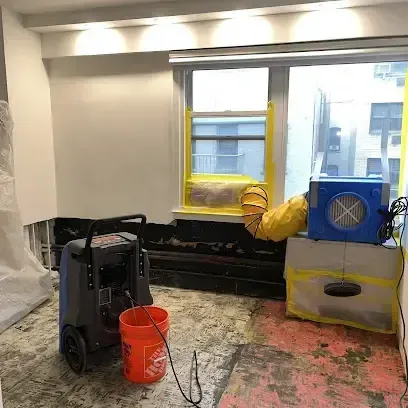
A leak that crosses two homes needs a plan for both. The restoration team starts with extraction in the unit where the water is deepest, then works through each affected space.
Ceiling sections that hold water are opened in a controlled way, wet insulation is removed, and drying equipment is set up in the cavity. Moisture readings in the adjoining rooms and units show whether water traveled farther than it looks.
Each type of loss has its own approach, including water heater leak cleanup, appliance and supply hose leaks and ceiling leak water damage in the unit below.
Documenting a loss that crosses two homes
When two households and a building are involved, clear records prevent confusion later. Responsibility is a matter for the lease and the insurers, not for the drying crew, but good records help every party.
- Photograph the source, the damage in each unit and any failed part such as a hose or a fitting.
- Write down the time the leak was found and when the water was shut off.
- Keep a list of damaged belongings with notes on age and condition.
- Save messages to the building manager, and keep copies of every estimate and invoice.
- Each household contacts its own insurer, since a claim in the leaking unit and a claim in the unit below are separate.
Questions
What should be shut off first when a water heater leaks?
The cold water supply to the heater goes first, then the power or gas as the controls direct. That stops new water from entering the tank and the floor. If the valve cannot be found or will not turn, the water to the whole unit is shut off.
Why does a washer leak reach the unit below so often?
The water spreads across the floor and under the flooring before it shows. In buildings where floors and ceilings are shared, it then follows joists and gaps downward into the ceiling cavity below.
Who is told when a leak reaches a neighbor's unit?
The building manager or owner is told first, in writing when possible, and the neighbors below are told right away. Each household also notifies its own insurer.
Does the ceiling below have to be opened?
Often yes. A ceiling that sags, bulges or drips holds trapped water, and opening it in a controlled way releases the water and lets the cavity dry. A small stain caught early may only need drying equipment and readings.
How long does drying take in an apartment?
Drying commonly runs several days. The amount of water, the flooring, the ceiling material and the weather all matter, and readings in each affected room decide when the equipment comes out.