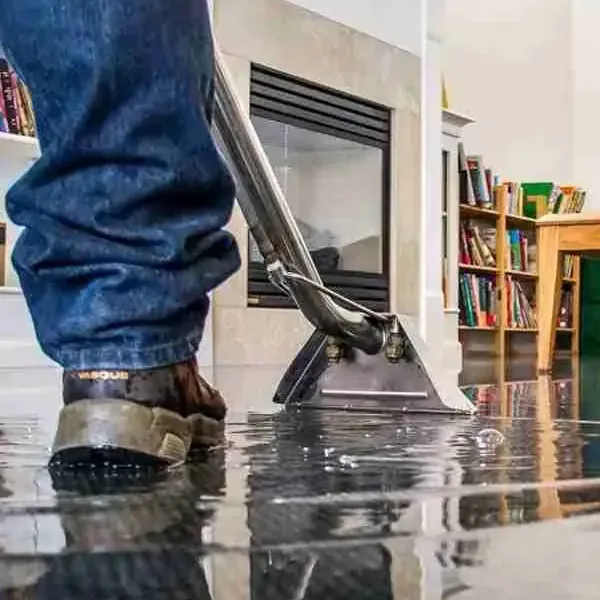
Pumping water out of a place that should be dry is an old problem here. In 1755 a steam engine was assembled to keep a copper mine clear, and the same priority drives modern water extraction: get the water out before anything else.
Key takeaways
- A Newcomen steam engine was assembled in North Arlington in 1755 to pump water out of the Schuyler Copper Mine, and it is reported as the first steam engine in North America.
- Standing water has to be removed before drying begins, because dehumidifiers and air movers cannot handle liquid water.
- Truck mounted units, portable extractors and submersible pumps each suit a different job, from carpet to deep standing water.
- The type of water, clean, gray or black, decides what protective gear and disposal the job needs.
- Extraction is only the first stage, and readings in floors, walls and framing show when the structure is dry.
A steam engine, a copper mine and a water problem
Copper was mined at the Schuyler Copper Mine in what is now North Arlington during the 18th and 19th centuries. In 1755 a Newcomen steam engine was assembled there to pump water out of the mine.
It is reported as the first steam engine in North America. The engine existed for one reason: a mine full of water cannot be worked, and the water had to come out first.
The borough was incorporated in 1896 from land taken from Union Township, and it is the southernmost municipality in Bergen County. A flooded kitchen or living room is a smaller version of the same problem as the mine.
Nothing else can be fixed until the water is gone.
What modern extraction uses
Extraction takes different tools depending on how much water there is and what it sits on. The same equipment is used for water extraction and removal across the area, from a single room to a whole floor.
- Submersible pumps move deep standing water toward a drain or a hose outlet.
- Truck mounted extractors pull water out of carpet and pad with strong suction.
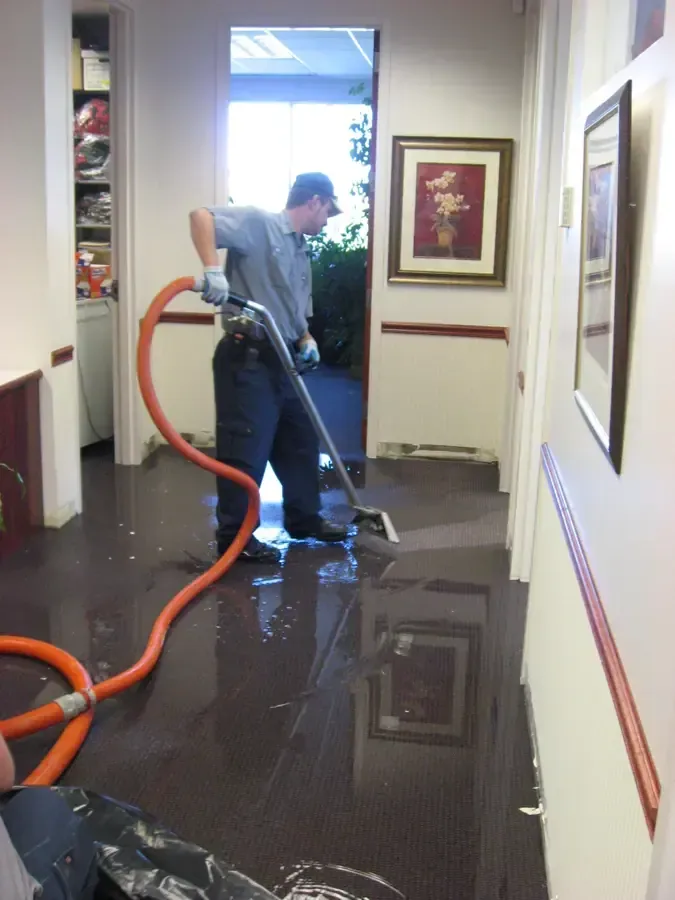
- Portable extractors reach rooms the truck hose cannot, such as upper floors.
- Squeegees and wet vacuums clear hard floors, stairs, corners and edges.
- Weighted wands press water out of thick pad before it is removed.
Reading a wet room: depth, surface and source
The same amount of water behaves differently on different floors, and the crew plans around that.
A few inches on a hard floor
Water on tile or vinyl can be squeegeed and vacuumed, but it runs under cabinets and into the base of walls. The crew checks those hidden edges with a meter.
Carpet and pad
Pad acts like a sponge and holds far more water than the carpet above it. Clean water can often be extracted from both, while contaminated water means the pad is removed.
Hardwood and engineered floors
Boards absorb water from below and the sides, then cup as they dry unevenly. Extraction from the surface comes first, then slow, controlled drying to limit damage.
Upper floors and occupied buildings
Water does not stay on the floor where it started. On an upper floor it can pass through the ceiling below, so extraction there is often paired with checks downstairs.
Portable extractors and hoses reach upper floors without disturbing the rest of the home. Protective sheeting keeps stairs and hallways clean while the crew works.
Why removal comes before drying
Drying equipment is built for moisture, not for puddles. Starting it too early wastes time and can make the room worse.
Liquid water versus moisture in the air
Dehumidifiers and air movers dry moisture that has already evaporated. They cannot move a pool of water, and drying around standing water only raises the humidity in the room.
Water left behind keeps spreading
Water wicks upward into drywall and baseboards and soaks into the subfloor. The longer it stays, the more material takes on water and the longer the dry down becomes.
Clean, gray and black water change the job
Under the IICRC S500 standard, water is sorted into three categories. Category 1 starts clean, Category 2 carries some contamination, and Category 3 is grossly contaminated.
Category matters during extraction. Category 3 water, such as sewage or river water, calls for protective gear, and porous materials it touched are removed rather than dried.
Water that sits for a while can also move to a worse category as it picks up contamination.
- Category 1: a broken supply pipe or an overflowing sink with clean water.
- Category 2: washer or dishwasher discharge and similar sources.
- Category 3: sewage, river water and storm runoff.
What a household can do before the crew starts
North Arlington counted 16,457 residents in the 2020 Census, living in 6,749 housing units. A leak in any one of them is an emergency in an occupied home, so stopping the source and protecting belongings come first.
- Shut off the water at the source or at the main valve.
- Stay off wet carpet and floors near outlets, cords and appliances.
- Place foil or blocks under furniture legs so wood does not stain.
- Lift small items, papers and photographs off the floor.
- Photograph the water, the source and the affected belongings.
Mistakes that slow the job
Good intentions can make a wet room worse. A few common mistakes are easy to avoid.
- Waiting to see whether it dries by itself while water soaks into walls.
- Pointing a household fan at a wet floor, which spreads moisture through the room.
- Walking on wet carpet, which pushes water deeper into the pad.
- Using a household vacuum on standing water, which is unsafe.
- Leaving wet furniture on wet carpet, which stains the wood.
After extraction: drying and readings
Once the water is out, the drying stage begins. Moisture meters check floors, baseboards and wall cavities, and air movers and dehumidifiers are placed to match what the readings show.
Structural drying continues until readings match a dry reference, which is the only way to know the work is done. A crew that skips readings is guessing.
The whole job, from the first pump to the final reading, is covered under water extraction and drying for homes across the borough.
Questions
Is the steam engine claim confirmed?
It is reported that a Newcomen steam engine assembled in 1755 to pump water out of the Schuyler Copper Mine was the first steam engine in North America. The date and the purpose are the part that matters here: pumping water out of a place that needed to be dry.
Can a hardware store wet vacuum do the job?
For a small spill, yes. For a flooded room, a household vacuum cannot keep up and may be unsafe on contaminated water. Truck mounted and portable extractors move far more water and finish the job faster.
Why does extraction come before fans and dehumidifiers?
Fans and dehumidifiers dry moisture in the air and in materials. They cannot remove standing water, and running them too early only raises the humidity while the water keeps soaking into the structure.
Does extraction work on hardwood and carpet?
Yes, with different methods. Carpet and pad are extracted with strong suction or removed if the water is contaminated. Hardwood is extracted from the surface, then dried with specialized equipment to limit cupping.
How do you know when drying is finished?
Moisture readings. The crew compares readings in floors, walls and framing with a dry reference and removes the equipment only when the numbers match.