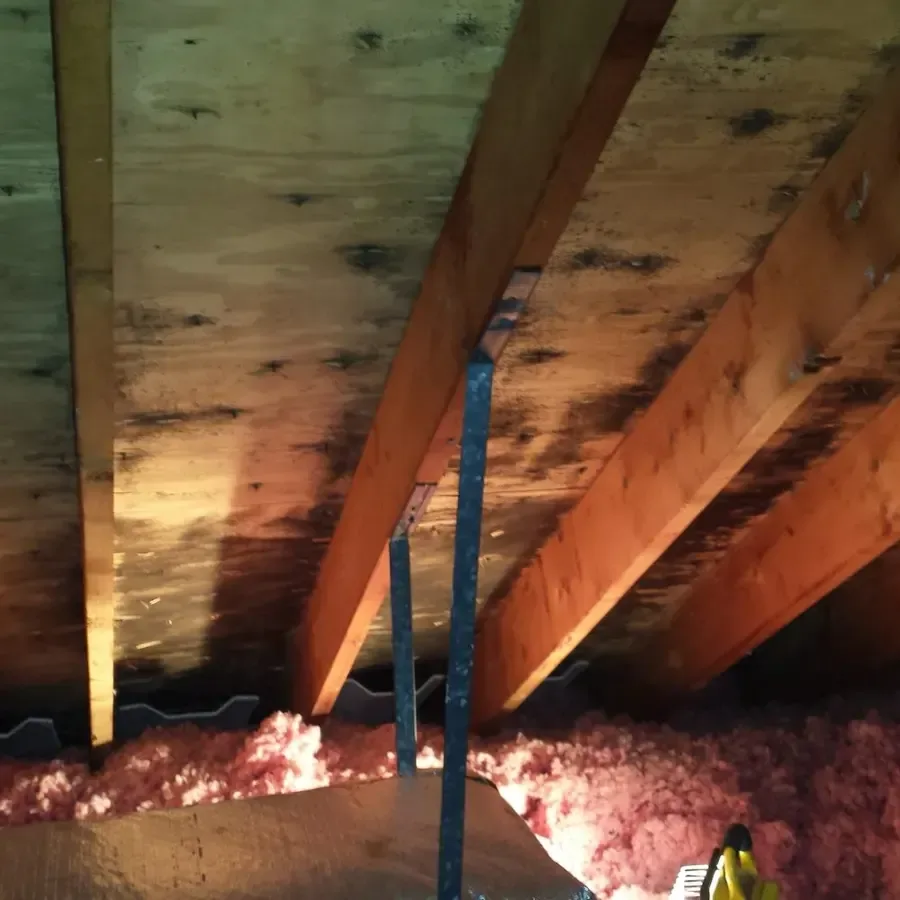
Glen Ridge gets about 49 inches of rain a year, and many of its houses are old. When steady rain finds a weak spot in a roof, the water can soak insulation and plaster well before a stain appears on the ceiling.
Key takeaways
- The borough averages about 49 inches of rain and measurable precipitation on about 124 days a year, so roofs here are tested often.
- About 72.8% of the borough's houses were built before 1939, and many have several roof planes, dormers and valleys where leaks can start.
- Roof leak water often travels along rafters and inside walls before it shows on a ceiling.
- A roofer repairs the roof, while the restoration team removes wet insulation and dries plaster and framing. Both jobs matter.
- Drying to readings, not judging by a dry looking stain, keeps a hidden leak from causing a second round of damage.
Why steady rain tests older roofs
The borough averages about 49 inches of rain and about 20 inches of snow a year, with measurable precipitation on about 124 days. Roofs rarely get a long dry break.
About 84.7% of the borough's homes are detached single family houses, and about 72.8% of its houses were built before 1939. Most of the borough was built out between roughly 1870 and 1940, and the styles run from Queen Anne Cottage and Shingle Style to Colonial Revival and Tudor Revival.
Roof shapes with more places to leak
Houses in styles like Queen Anne Cottage and Tudor Revival often have steep slopes, dormers, bays, chimneys and valleys where two roof planes meet.
Each junction relies on flashing, and flashing is where many leaks begin.
What steady rain does
A downpour shows a leak fast. Steady rain over many hours is different, because it can push water through small gaps that a short storm misses.
The water runs slowly, so the damage builds quietly while the house looks fine from the street.
Where the water travels before the stain shows
A roof leak rarely drips straight down from the hole. Water follows the path of least resistance, and that path is often long.
In the attic
Water runs down the underside of the roof deck and along rafters, then drips onto the insulation. Insulation holds water like a sponge, and wet insulation sags and stops doing its job.
Inside plaster and framing
From the attic floor, water works down into the top of the wall and across the ceiling. Plaster over lath holds the moisture, so a stain may appear well after the leak began and a good distance from the opening in the roof.
By the time the stain shows, the framing above it has usually been wet for some time.
Signs of a roof leak after steady rain
None of these signs proves where the opening is, but each one calls for a closer look.
- A brown stain or ring on a ceiling or at the top of a wall.
- Paint that bubbles, peels or cracks near the ceiling edge.
- Damp, matted insulation or dark stains on rafters in the attic.
- A musty smell in an upstairs room or closet.
- Drips during or after rain, especially around chimneys, dormers and bay windows.
What to do while it is still raining
The goal is to limit what the water reaches and to keep everyone safe. A wet roof is dangerous to walk on, so temporary protection is a job for a roofer with fall protection.
- Place a bucket under drips and move furniture out from under the stain.
- Lift the nearest rug or floor covering so water does not soak into it.
- Keep light fixtures off if water is near them.
- Photograph the stain, the attic and the roof from the ground.
- Contact a roofer for a temporary cover and the restoration team for the wet material.
Questions to ask a roofer
A roof repair and a restoration job are separate, but the roofer's answers shape the drying plan.
- Where is the opening, and can a photo show it?
- Is the cause flashing, a valley, a vent or the roof surface itself?
- Is the repair temporary or permanent?
- Does the attic need another look after the next heavy rain?
- Can the roofer share photos for the insurance claim?
Drying a hidden leak
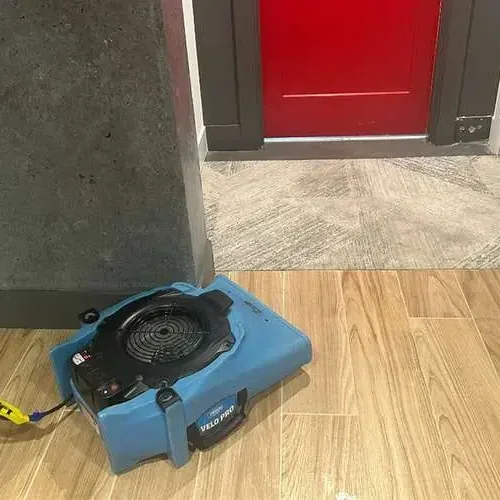
A roofer fixes the opening, but the water already inside needs its own plan. The restoration team removes wet insulation, opens ceiling sections where plaster or drywall is saturated and sets drying equipment.
Moisture readings are taken in the attic, the ceiling and the walls below, so no wet area is left behind. Roof leak water damage work ends when readings match a dry reference.
Original plaster, trim and woodwork in older houses are worth saving where drying works, so the crew removes only what has to go. Framing and masonry in the walls are dried as well, using the same methods as structural drying.
- Wet insulation is bagged and removed.
- Plaster and drywall are tested for moisture and opened only where needed.
- Air movers and dehumidifiers run in the attic space and the rooms below.
- Daily readings track the dry down until the materials match a dry reference.
- Repairs and paint come last, after the materials pass.
Keeping plaster, trim and woodwork
In an older house, the finishes are part of what is being protected. Plaster, trim and woodwork can often be saved if they are dried carefully.
Drying too fast can crack old plaster and open joints in woodwork, so the crew adjusts air movement and humidity to the material. Photographs taken before any removal show what was original and what was damaged.
- Do not paint over a stain until readings show the material is dry.
- Let the crew mark what is saved, what is opened and what is removed.
- Keep removed trim in case matching pieces are needed later.
Checking for a stain, now and after the next storm
When a stain is already on the ceiling
A stain below the attic often means water has been present for a while. The work traces the stain back toward the opening, checks the attic and finds how far the moisture spread.
Anyone unsure whether a stain is old or new can have the area read with a moisture meter, which shows whether the material is still wet. A stain that keeps returning is worth a second look, and water damage restoration in an older home starts with those same readings.
After the next heavy rain
A repaired roof is only proven by the next storm. A short check keeps a small problem from becoming a large one.
- Look at the ceilings and the tops of walls on the top floor.
- Check the attic for damp insulation or drips.
- Look at the areas around chimneys, dormers and bay windows.
- Keep gutters and downspouts clear so water leaves the roof edge.
Questions
How can a roof leak be confirmed if the attic looks dry?
Moisture meters and thermal cameras find wet material that the eye cannot see. A stain on the ceiling with a dry looking attic often means the water traveled along framing and is still sitting inside a wall or ceiling.
Can original plaster be saved after a roof leak?
Often yes, if it is dried before it softens. Plaster that is still firm and reads dry can stay, while sections that crumble or sag come out. The crew removes only what has to go.
Does the roof need to be fixed before drying starts?
The leak should be stopped or covered so new water does not enter. Drying wet insulation and plaster while the roof still leaks only repeats the problem, so a temporary cover comes first.
Should the ceiling be opened if the stain is small?
Sometimes. A small stain can hide a large wet area above it. Readings show whether the cavity holds water, and the ceiling is opened only if the readings call for it.
Who handles a roof leak, a roofer or a restoration company?
Both. A roofer repairs the roof and the flashing. The restoration team removes wet material and dries the structure, so the leak does not cause a second round of damage.