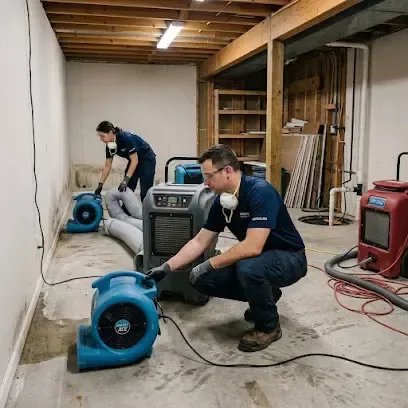
Harrison mixes active warehouses, ground floor retail beneath apartments, a hotel and a stadium district. When water gets into a building like that, drying in phases keeps the unaffected parts open while the wet parts are dried.
Key takeaways
- Phased drying isolates the wet zone, dries it and verifies it, so tenants in dry areas can keep working.
- Ground floor retail beneath apartments often gets water from above, which means the source and the damage can sit in different tenancies.
- Hotels, offices and warehouses each need a different plan, from room by room containment to protecting stock on concrete floors.
- Moisture mapping shows where the water went, so the dry down covers the whole path and not only the visible wet spot.
- Photos, inventory lists and daily logs document downtime and support insurance claims.
The mix of buildings that shape a commercial loss
Active warehouses and truck traffic remain in the redevelopment area between the Passaic River waterfront and Interstate 280.
Nearly 3,000 residential units have been built in that area, mostly apartment buildings near the PATH station. Vermella Harrison, a five story mixed use building near the stadium, has 400 apartments and ground floor retail.
The 138 room Element by Westin hotel stands beside the PATH station, and Sports Illustrated Stadium, which opened in 2010 on the Passaic River, holds about 25,000 fans.
What phased drying means
A business cannot always close for a week. Phased drying splits the work into stages so the wet zone is handled while the rest of the building stays in use.
Phase one: stop, extract and protect
The source is shut off, standing water is extracted and unaffected areas are protected with barriers. Power to wet circuits is made safe.
Phase two: isolate and dry
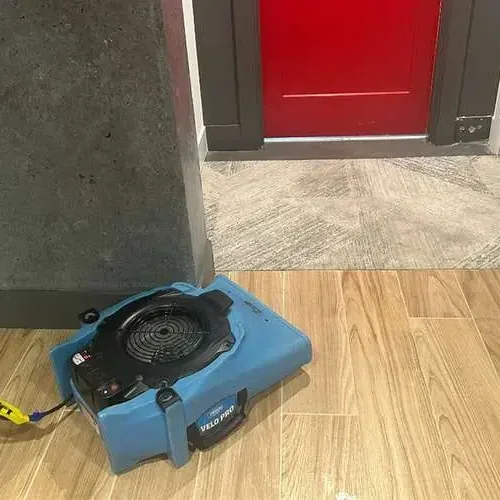
The wet zone is contained with plastic sheeting so moisture does not drift into dry space. Air movers and dehumidifiers run inside the zone.
Walls, ceilings and floors are opened where readings call for it.
Phase three: verify and release
Readings are taken against a dry reference. Zones are released one at a time, so tenants can move back as their space is cleared.
Structural drying is the stage that decides when each zone passes.
Before phase one: what the owner does first
The first steps are about safety and records, because the restoration team needs a clear picture of the loss.
- Shut off the water source if it can be reached safely.
- Tell building management and keep staff and customers out of wet areas.
- Protect equipment, records and stock by lifting them off the floor or covering them.
- Photograph the damage and the source before anything is moved.
- Tell the insurer, and ask what documents it needs.
Ground floor retail beneath apartments
In a mixed use building, the pipes that feed upper apartments run above a shop. A burst supply pipe or a failed appliance upstairs sends water through the ceiling below.
The retail tenant, the apartment owner and the building owner may all be involved, so the source and the damage are documented together.
A small leak above a shop can still close the shop if it reaches the lights or the electrical outlets, so the first priority is making the wet area safe.
- Ceiling tiles, insulation and light fixtures are often the first to be affected.
- Stock, counters and displays below the leak are moved or covered.
- Computers, registers and records are lifted out of the wet path.
- Shared walls are checked, since the water may have moved sideways into the next shop.
Hotels, offices and warehouses
Different buildings lose time in different ways, so the drying plan follows how each one earns its keep.
Hotels
A hotel loses revenue by the room. A leak that reaches one guest room can also reach the rooms beside and below it, so each room is mapped and closed off while the rest stay in service.
Offices and open floors
Open floors in offices are dried in sections, so desks, servers and records can be moved out of the wet path. A full commercial water damage plan lists each section and its drying order, and the same approach applies to any commercial water damage restoration job in the area.
Warehouses
Large industrial buildings add stock, racks and pallets to the picture. Water spreads far across a concrete floor, and cardboard and wood pallets soak it up.
- Lift stock off the wet floor and separate wet items from dry ones.
- Photograph each pallet or rack before it is moved.
- Dry the floor with dehumidifiers sized for the volume of the space.
- Check the lower rows of racks and the walls for wicked water.
Documenting downtime and loss
Clear records speed a claim and avoid disputes later. The restoration team keeps its own log, and the business keeps a matching one.
- Daily notes on which zones are wet, drying or released.
- Photos before, during and after the work.
- An inventory of damaged stock, with quantities and values.
- Invoices and messages with tenants, owners and the insurer.
- A record of closed hours or lost sales if the business had to stop.
Working with landlords, tenants and insurers
Most commercial losses involve more than one party. A landlord controls the building systems, a tenant controls the contents and each has its own insurer.
Clear communication keeps the work moving. The restoration team shares readings and drying plans with everyone who has a stake, and the lease and the policies decide who pays.
Before a loss happens: a short plan
A short plan, written in advance, speeds up every step once water appears. Good water damage restoration starts well before the loss, with a plan that belongs to the business itself.
- Know where the shutoff valves are for the space and the building.
- Keep a contact list for the building manager, the insurer and a restoration team.
- Photograph the space when it is dry and fully stocked.
- Keep stock and records off the floor where possible.
- Back up important records somewhere separate from the space.
Questions
Can a shop stay open while a wet area is dried?
Often, in part. Barriers contain the wet zone, and the dry areas can keep operating. A plan with phases and a clear release order lets the business reopen sections as they pass readings.
What is moisture mapping?
It is a set of readings that shows where the water went. The crew records readings on a grid of walls, floors and ceilings, which defines the wet zone and shows when it is dry.
What happens when a leak starts in an apartment above a shop?
The leak is stopped at the source, then the water below is extracted and the ceiling cavity dried. Who pays is a matter for the lease and the insurers, so records of the source and the damage matter to both sides.
How are hotel rooms handled during drying?
Each affected room is mapped and closed off, and the rooms around it are checked with readings. Rooms that pass are released back to service one at a time.
How long does phased drying take?
It depends on the size of the zone and the materials. Small zones can pass in a few days, and larger ones take longer. Readings, not the calendar, decide when each phase ends.
What should a business move first when water appears?
Records, electronics and stock that sit on the floor or under the leak. Lifting them out of the wet path takes priority over cleaning, and photos taken before the move support the claim.