Sewage Backup Cleanup in Glen Ridge, NJ
Sewage in a home is a contamination job, not a spill. The restoration team in protective gear extracts it, removes what it soaked, treats the surfaces and dries the space before anything is rebuilt.
(888) 471-9821Sewage coming up? Keep out and call the cleanup crew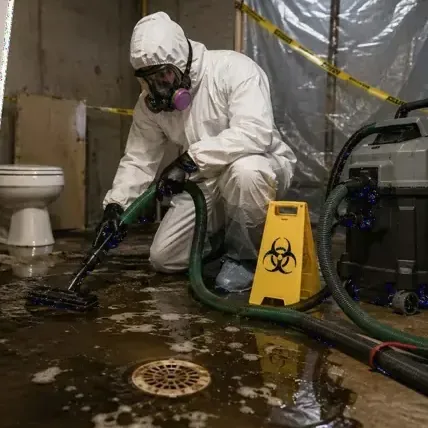 IICRC S500 drying
What every sewage backup cleanup job includes
Dispatch at any hour
Active water is treated as urgent around the clock, weekends and holidays included.
Drying to IICRC S500
Air movers and LGR dehumidifiers sized to the class of loss, not to a guess.
A claim-ready file
Moisture maps, daily psychrometric logs and timestamped photos before any demolition.
Old-house know-how
Plaster, balloon framing, stone foundations and cast iron drains are routine work here.
What to do before the crew arrives
A few safe moves limit how far the water travels while the truck is on the way.
Call (888) 471-9821- Keep clear. Keep people and pets out of the affected area, and avoid touching the water.
- Hold the flushing. Skip toilets, sinks and washers so nothing more is pushed into the drain.
- Skip the mop. Mops and wet vacs spread bacteria around the room.
- Photograph from a distance. Take photos of the water and what it reached before anything is moved.
What does sewage backup cleanup cost in Glen Ridge, NJ?
Sewage cleanup typically runs $2,500 to $30,000 or more, depending on how far the water spread, what porous materials it reached and how long it sat before removal began.
Contained drain backup
- Single area affected
- Extraction and cleaning
- Antimicrobial treatment
Finished basement
- Carpet and pad removed
- Drywall cut out
- Dehumidifiers running
Large or long-sitting
- Wide area affected
- Heavy material removal
- Extended drying
Ranges are typical, not a quote: water category, square footage, material class and how fast drying started move the number most. Try the water damage cost calculator for a closer range.
How sewage backup cleanup is handled, step by step
Contain
The area is sealed off and the water category confirmed.
Remove
Contaminated water and porous materials come out.
Treat
Hard surfaces are cleaned and treated.
Dry
Equipment runs until the structure tests dry.
Water that comes up through a floor drain or toilet carries bacteria, so it is treated as contaminated from the first moment. The restoration team contains the affected area, keeps people and pets out and does the cleanup in protective gear. The cause may be a clog in the house drain or a problem farther out, and either way the water inside is handled the same way.
What gets removed and what gets cleaned
Porous materials that sewage touched cannot be made safe by drying, so they are cut out, bagged and taken away. Hard materials such as tile, sealed wood and metal can usually be cleaned and kept.
- Carpet and pad that sat in the water
- Drywall and insulation below the waterline
- Cabinet kicks and baseboards that soaked
- Hard surfaces cleaned and treated in place
Cleaning, treating and drying
After removal, hard surfaces are cleaned and treated with an antimicrobial, then air movers and dehumidifiers dry the structure. Readings confirm the framing is dry before anything is closed up, which also heads off mold. Containment stays in place until the work is finished so nothing spreads.
Water still moving? Close the shutoff if it is safe, keep clear of wet outlets, then call.
Call (888) 471-9821Why sewage calls for a trained crew
Bacteria in sewage can reach clothing, hands and air, so the mix of protective gear, containment and disposal matters. When the water came up after heavy rain, the job may overlap with basement flooding cleanup or storm flood cleanup.
Official guidance
For safety steps beyond the dry-out, see Ready.gov flood safety and EPA indoor air quality.
Sewage backup cleanup across Glen Ridge and nearby towns
Sewage jobs cover ZIP 07028 end to end, from the Panhandle and The Glen along Bloomfield Avenue, Bay Avenue and Ridgewood Avenue, including the apartment complexes near the Glen Ridge Community Pool.
The same service nearby: sewage backup cleanup in Kearny, East Orange, North Arlington.
Sewage Backup Cleanup questions, answered
Still dealing with sewage backup cleanup?
Sewage on the floor? Keep clear and let the cleanup crew in.
(888) 471-9821 Bring in the sewage cleanup crewIs sewage water dangerous?
Yes. It can carry bacteria and viruses, which is why it is treated as Category 3 and handled in protective gear with the area contained.
Can carpet touched by sewage be saved?
No. Carpet and pad that sat in sewage are removed and discarded, since drying does not make a porous material safe again.
What if sewage came up a floor drain?
Stay out of the water, avoid using other fixtures and call. The crew extracts it, removes what it soaked and treats the surfaces.
Does insurance cover a sewage backup?
Often only with a water backup endorsement on the policy. Check your coverage and talk to your insurer before the cleanup is finished.
Who fixes the cause of the backup?
A plumber finds and repairs a clog or a failed drain. The restoration team handles the contaminated water and everything it reached.
How soon can rooms be used again?
Only after the area is cleaned, treated and reads dry. Replacement of the removed materials comes after that, so the timeline depends on how much came out.
Contaminated water needs a trained crew.
Sewage spreads bacteria the longer it sits. The restoration team contains the area, removes the water and the soaked materials and treats the rest.
(888) 471-9821Send the cleanup crew in protective gear