Structural Drying and Dehumidification in Newark, NJ
Newark was settled in 1666 and is one of the oldest cities in the country, so drying here has to account for older construction after a flood or a leak.
(888) 471-9821Start drying the structure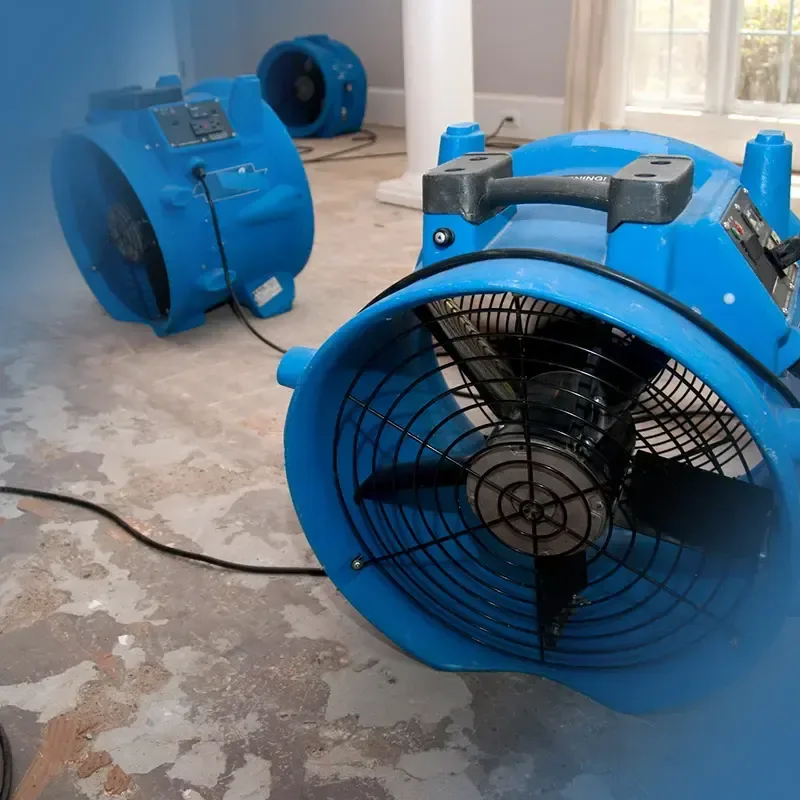 IICRC S500 drying
What every structural drying and dehumidification job includes
Dispatch at any hour
Active water is treated as urgent around the clock, weekends and holidays included.
Drying to IICRC S500
Air movers and LGR dehumidifiers sized to the class of loss, not to a guess.
A claim-ready file
Moisture maps, daily psychrometric logs and timestamped photos before any demolition.
Old-house know-how
Plaster, balloon framing, stone foundations and cast iron drains are routine work here.
What to do before the crew arrives
A few safe moves limit how far the water travels while the truck is on the way.
Call (888) 471-9821- Keep the heat steady. Hold the building at a normal temperature so drying equipment works well.
- Leave equipment alone. Do not move air movers or unplug dehumidifiers between visits.
- Close windows. Keep doors and windows shut so humid outdoor air stays out.
- Keep a record. Save readings and photos for the claim.
What does structural drying and dehumidification cost in Newark, NJ?
Structural drying usually runs from $1,200 to $16,000+, set by how many rooms are wet, which materials absorbed water and how many days of equipment are needed.
One room, Class 1 or 2
- Air movers placed
- Dehumidifier running
- Daily readings
Several rooms or a basement
- Several drying zones
- Wall bases opened
- Readings each visit
Class 4 materials
- Dense materials dried
- Specialty equipment
- Extended monitoring
Ranges are typical, not a quote: water category, square footage, material class and how fast drying started move the number most. Try the water damage cost calculator for a closer range.
How structural drying and dehumidification is handled, step by step
Measure first
Meters set the starting readings.
Place equipment
Air movers and dehumidifiers go in.
Monitor daily
Readings steer each adjustment.
Confirm dry
Equipment leaves when targets are met.
Removing the water is only half of a flood or leak job. Drywall, framing, subfloors and plaster still hold moisture that evaporates slowly, so structural drying uses controlled airflow and dehumidification to pull it out before it causes swelling, odors or mold.
How drying is controlled
Equipment is placed by material and by room, then moved or removed at each visit as the meter readings change.
- Air movers push dry air across wet surfaces
- Dehumidifiers pull moisture out of the room's air
- Moisture meters track every wall, floor and ceiling
- A daily log records readings for the claim
Why older buildings dry differently
Forest Hill has older mansions and colonial homes, and materials like thick plaster, dense framing and layered flooring hold water longer than modern drywall. That is why drying plans lean on readings, not a calendar.
Water still moving? Close the shutoff if it is safe, keep clear of wet outlets, then call.
Call (888) 471-9821When drying is finished
Equipment stays until every wall, floor and ceiling reads dry against an unaffected reference. Then it is removed and the log goes to the owner. Drying often follows water extraction, and large losses may include commercial water damage work in offices and shops.
Official guidance
For safety steps beyond the dry-out, see EPA indoor air quality and Ready.gov flood safety.
Structural drying and dehumidification across Newark and nearby towns
Drying crews work across Newark's ZIP codes, including 07102, 07104 and 07108, serving the Forest Hill Historic District, the Ironbound, downtown and neighborhoods along Broadway and Springfield Avenue.
The same service nearby: structural drying and dehumidification in Kearny, Harrison, East Orange.
Structural Drying and Dehumidification questions, answered
Still dealing with structural drying and dehumidification?
Tell the crew which rooms are wet and what the floors are made of.
(888) 471-9821 Newark drying equipment helpHow long does structural drying take?
Most jobs need several days, but the readings decide. Equipment stays until each material matches its dry goal.
Why are dehumidifiers needed with air movers?
Air movers lift moisture off surfaces, and dehumidifiers remove it from the air. Without that second step the humidity just moves around.
Can the equipment run overnight?
Yes. Equipment runs around the clock because drying stalls when it stops.
Do old plaster walls dry differently?
Yes. Thick plaster and dense framing hold water longer, so they usually take more days of equipment than modern drywall.
What is a Class 4 job?
Class 4 covers deeply held moisture in dense materials such as plaster, hardwood, concrete or stone, which dries slowly and needs specialty drying.
How is a finished job confirmed?
Meter readings are compared with unaffected reference areas, and the daily log documents every step.
Walls and floors still damp?
Air movers, dehumidifiers and moisture meters are brought for homes, rowhouses, apartment buildings and commercial space, with daily readings until every material reaches its goal.
(888) 471-9821Call to start the drying